How to buy SpaceX (SPCX) shares on Trading 212

SpaceX listed on Nasdaq in June 2026 in the largest IPO on record, and its shares now trade under the ticker SPCX. Here is what UK and international investors should understand before buying.
How was the IPO priced, what are you actually buying with SPCX shares, and how can you invest through Trading 212? This article covers the key details and what investors need to know.
How was the IPO priced, what are you actually buying with SPCX shares, and how can you invest through Trading 212? This article covers the key details and what investors need to know.
QUOTE
If humanity doesn't land on Mars in my lifetime, I would be very disappointed.
Big ideas
- SpaceX is increasingly positioning itself as more than a space and satellite internet company. Its merger with xAI means investors also need to assess AI infrastructure, data-centre operations and how these assets affect the company’s valuation and risk profile.
- SpaceX priced its IPO at $135 a share, raising around $86bn including the underwriters’ additional shares, at a valuation of around $1.77tn, the largest IPO on record.
- SPCX opened at $150 on its first day and closed at $160.95. Investors who bought on the open market paid well above the $135 IPO price, a reminder that the offer price is not what most retail investors pay.
- SpaceX is effectively several businesses in one: launch services, government contracts, Starlink connectivity and AI infrastructure following the xAI merger, meaning investors need to consider all of them together.
Key considerations before investing in SpaceX
SpaceX attracts attention because it combines several high-profile themes in one company: satellite internet, rocket launches, government contracts, artificial intelligence infrastructure and Elon Musk’s founder profile. That mix may be appealing to some investors, but it also makes the business harder to value.
The key question is not simply whether SpaceX is an exciting company. It is whether the price investors pay reflects the company’s current financial performance, future growth expectations, governance structure and execution risks.
IPOs tend to be some of the highest risk, but potentially highest reward investments, offering the opportunity to get in right at the start of a public company’s journey. Of course, many companies don’t live up to expectations and even fail, while a select few go on to achieve roaring success.
Investors should assess SpaceX on its own fundamentals rather than relying on comparisons with other Musk-led companies.
SpaceX IPO basics (ticker, structure, and what you'll actually be buying)
Since June 2026, SpaceX shares have traded publicly on Nasdaq, giving retail investors access to a company that was previously only available to private backers and employees.
What "SpaceX IPO stock" means in practice
SpaceX, formally known as Space Exploration Technologies Corp., was a private company until June 2026. Before the IPO, ownership was limited to institutional backers, private equity and employees.
DEFINITION
When a company goes public through an IPO, it issues new shares to the public for the first time, or existing shareholders sell a portion of their holdings, or both.
What is an IPO? To learn more about how IPOs work, check out our full article on the subject: IPO Meaning: (Initial public offering).
SpaceX listed with a dual-class share structure.
- Class A shares, which carry one vote each, are the ones that trade publicly.
- Class B shares carry ten votes each and are held primarily by Elon Musk and a small number of insiders.
As a result, Musk holds approximately 82.4% of the combined voting power of the company, according to the final prospectus, including about 91.6% of the ten-vote Class B shares.
In practical terms, this means that public investors buying SPCX shares will have economic exposure to SpaceX’s performance, but very limited influence over how the company is run.
Decisions on mergers, strategy, executive pay, and capital allocation will remain firmly with Musk and the existing insiders. This structure is not unusual in founder-led technology companies, but it is worth considering before getting involved.
SpaceX is also a considerably more complex entity than it was even eighteen months ago.
- In February 2026 SpaceX merged with xAI.
- xAI, Musk's artificial intelligence business, brought Grok, the X social media platform, and the Colossus data centre operations into the same filing.
In short: Buyers of SPCX stock are taking a position across rocket launches, satellite internet, AI infrastructure, and social media simultaneously.
What happened at the SpaceX IPO
SPACEX IPO DATE
– Priced: 11 June 2026 at $135 per share
– First day of trading: 12 June 2026 (Nasdaq, ticker SPCX)
– First day: opened at $150, closed at $160.95 (+19.2%)
– First day of trading: 12 June 2026 (Nasdaq, ticker SPCX)
– First day: opened at $150, closed at $160.95 (+19.2%)
SPCX and the first trading day: how the market usually forms expectations
The offer price set during bookbuilding is the price at which institutional investors are allocated shares. It is almost certainly not the price you will pay as a retail investor!
Once SPCX began trading on Nasdaq, the price was determined by the open market.
Once SPCX began trading on Nasdaq, the price was determined by the open market.
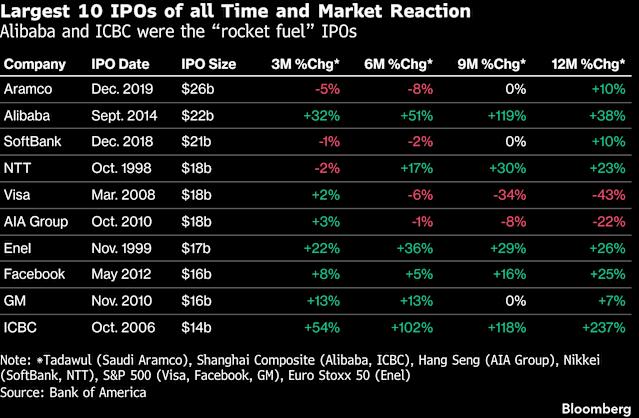 Sursă: Bank of America. Image for illustration purposes, not indicative of future performance. This information is not investment advice. Do your own research.
That is exactly what happened with SPCX: the IPO priced at $135, but the stock opened at $150, so investors buying on the open market paid around 11% more than the offer price.
Before looking at SpaceX’s valuation, it helps to understand why the numbers are so large.
SpaceX IPO valuation: why investors argue about a trillion-dollar number
SPACEX VALUATION
SpaceX priced its IPO at a valuation of about $1.77tn, raising around $75bn, or around $86bn including the underwriters' additional shares.
That put SpaceX among the largest listed companies in the world from its first day of trading, despite posting significant losses.
Valuation comparisons should be treated cautiously, especially for companies with different business models and profitability profiles.
Valuation comparisons should be treated cautiously, especially for companies with different business models and profitability profiles.
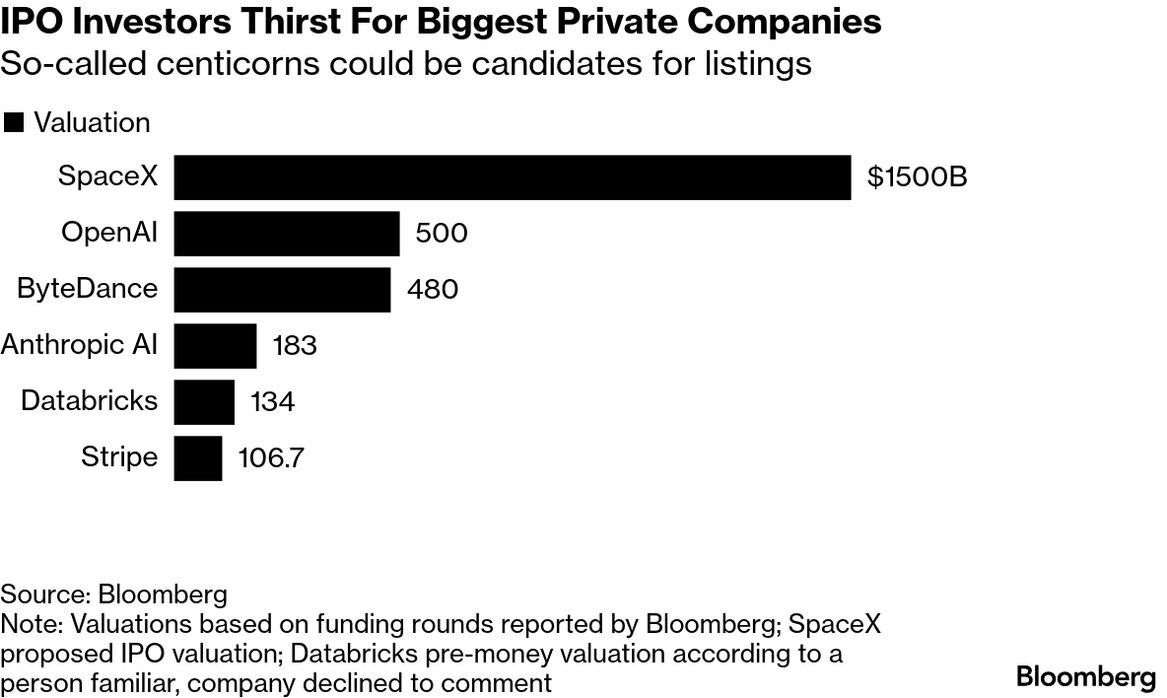 Sursă: Bloomberg. Image for illustration purposes, not indicative of future performance. This information is not investment advice. Do your own research.
The valuation debate centres on what kind of company SpaceX actually is. Of its three divisions, only the connectivity segment powered by Starlink was profitable in the first three months of 2026.
Starlink generated $11.4 billion in revenue in 2025, with $4.4 billion in operating income, and had 10.3 million subscribers across 164 countries at the end of March 2026. That is the part of the business most often cited to support the valuation.
Analysts disagree on how much weight to give to the AI division, the orbital data centre ambitions, and the longer-term bets on asteroid mining and space-based manufacturing, all of which are either loss-making or entirely speculative at this stage.
SPACEX LISTING PRICE
SpaceX sold about 555.6 million Class A shares at $135 each in its IPO. Before the IPO, a December 2025 secondary sale had reportedly valued the company at around $800bn, at $421 per share before the 5-for-1 stock split. Private secondary-market prices like this don’t necessarily reflect the public-market price.
SpaceX IPO investment vs trading: Separating valuation from short-term moves
The distinction between buying SPCX as a long-term position and trading in the short term is worth drawing clearly, because the considerations for each are quite different.
For those thinking about a longer-term position, the core question is whether the valuation is justified by the business as it stands today or by what it might become. At its $1.77tn IPO valuation, SpaceX was priced at about 95 times its 2025 revenue of $18.7bn.
Since 1980, issuers with trailing annual sales of at least $100 million and a price-to-sales ratio above 40 have seen an average three-year drop of 45% from their first day's close. That is not a prediction, but it is a data point worth factoring in.
Trading SpaceX stock
For those focused on shorter-term price action, moves are likely to be shaped by quarterly results, insider lock-up releases and broader market conditions.
A checklist before investing in SPCX
Before considering any position in SPCX, here are the practical things worth working through first.
- | Check these things | The details you should research |
1 | Read the prospectus (not the headlines) | The final prospectus and SpaceX’s quarterly filings are available on the SEC’s EDGAR database. Handy tip: Focus especially on the risk factors, business model, governance structure and valuation. Additionally: Revenue figures, loss figures, the share structure, Musk's voting control, and lock-up terms are all ready to dig through. |
2 | Understand the share structure | SPCX Class A shares carry one vote each. Musk holds Class B shares carrying 10 votes each, giving him approximately 82.4% of combined voting power, according to the final prospectus. Public shareholders will have economic exposure to SpaceX's performance but no meaningful say in how the company is run. |
3 | Know what you are buying into | SpaceX now covers Starlink satellite internet, orbital launch services, the xAI AI division, the Colossus data centre operation, and the X social media platform. NOTE: At the time of the IPO, only Starlink was profitable (Q1 2026). The AI segment lost $2.5 billion in that same quarter. Summary: A position in SPCX is a view on all of those businesses at once. |
4 | Check platform access | SPCX is available to trade on Trading 212. You can invest using fractional shares from a small amount. |
5 | Be clear on the valuation context | At its $1.77tn IPO valuation, SpaceX was priced at about 95 times its 2025 revenue of $18.7 billion. There is no P/E multiple to consider since the company posted a net loss of $4.95 billion for full-year 2025, and a further $4.28 billion in Q1 2026 alone. |
6 | Watch the lock-up release dates | SpaceX uses a staggered lock-up. Insider shares are released in stages after the IPO, with a final 180-day release on 8 December 2026 and Elon Musk’s shares locked until 12 June 2027. Each release can add selling pressure. |
How to buy SpaceX on Trading 212
SpaceX trades on Nasdaq under the ticker SPCX and is available to buy on Trading 212. Here’s how:
Step 1: Make sure your Trading 212 account is set up and funded
- Log in to the Trading 212 app or desktop platform.
- If you haven’t opened an account yet, you can sign up directly in the Trading 212 app.
- Make sure your account is verified and funded.
Step 2: Search for SPCX
- Search for SPCX in the Trading 212 app to find the instrument page.
Step 3: Decide on the size of the position and place the order
There’s no need to place orders for whole share amounts to gain exposure to SpaceX stock because Trading 212 supports fractional shares. If you prefer, simply choose how much you want to invest in your chosen currency, and Trading 212 will automatically calculate how many SPCX shares this will be.
Step 4: Confirm the order and monitor the position
- Once you place an order, a confirmation will appear straight away within the app.
- Newly listed stocks can be volatile, especially around lock-up releases, so it is sensible to keep an eye on your position.
SpaceX listed on Nasdaq under the ticker SPCX on 12 June 2026 and is available to trade on Trading 212. The price you pay is the market price at the time your order is executed.
SpaceX IPO FAQ
When did SpaceX go public?
SpaceX priced its IPO on 11 June 2026 and started trading on Nasdaq on 12 June 2026 under the ticker SPCX.
What was the SpaceX IPO price?
$135 per share. The stock opened at $150 on its first day of trading and closed at $160.95.
Can I buy SpaceX shares on Trading 212?
Yes. SPCX is available on Trading 212, including with fractional shares.