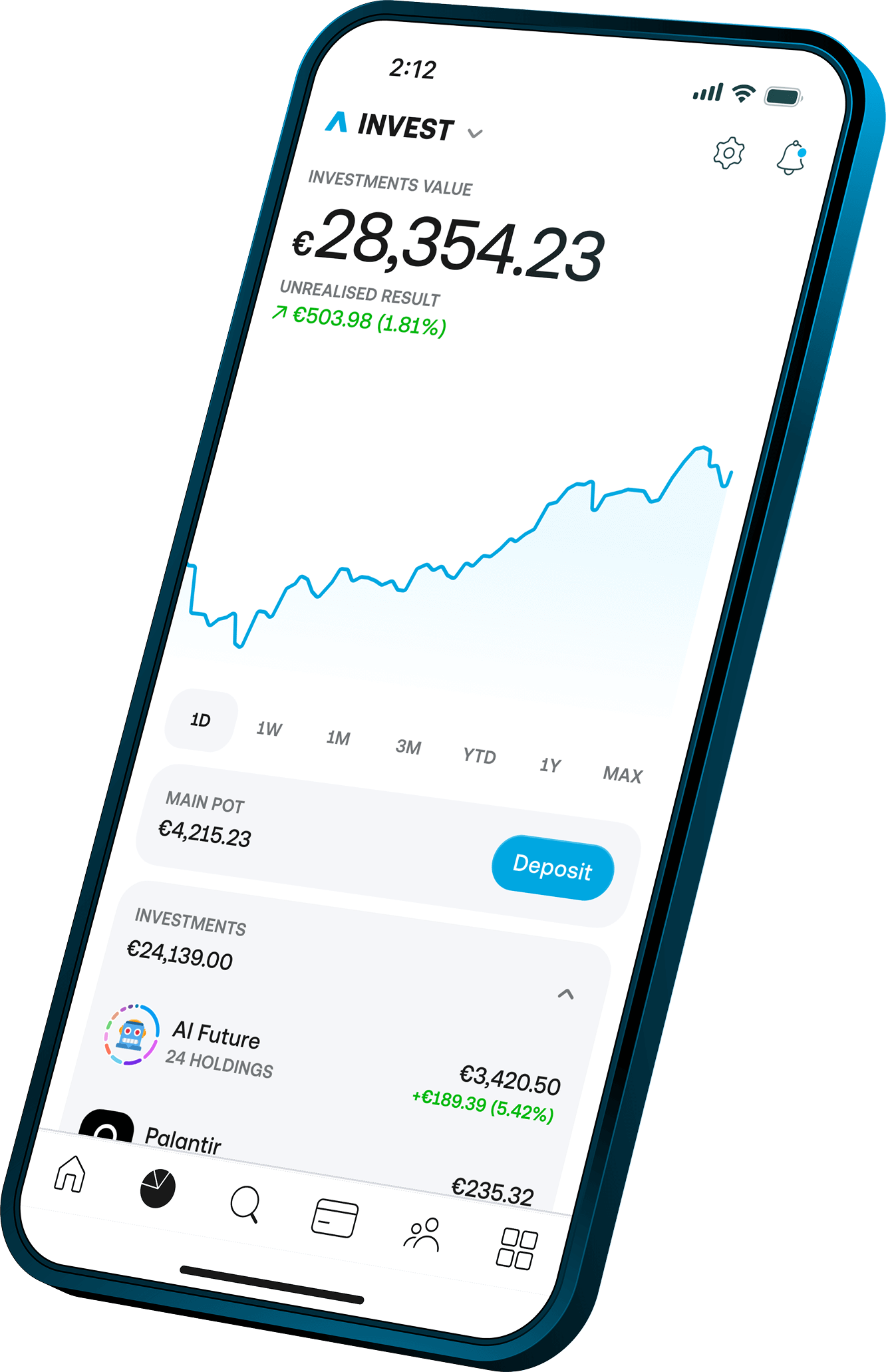
How to buy SpaceX IPO on Trading 212

SpaceX is one of the most closely watched potential listings in years. If its shares become available to trade publicly, here is what UK and international investors should understand before placing an order.
What does it actually mean to buy SpaceX stock, how is the price determined, and where can international and UK investors access it on day one? This article explains the basics in plain English.
What does it actually mean to buy SpaceX stock, how is the price determined, and where can international and UK investors access it on day one? This article explains the basics in plain English.
QUOTE
If humanity doesn't land on Mars in my lifetime, I would be very disappointed.
Big ideas
- SpaceX is increasingly positioning itself as more than a space and satellite internet company. Its merger with xAI means investors also need to assess AI infrastructure, data-centre operations and how these assets affect the company’s valuation and risk profile.
- SpaceX has reportedly been discussed at a potential IPO valuation of around $1.75 trillion to $2 trillion, with a possible $75 billion raise. These figures should be treated as reported estimates unless confirmed in official offering documents.
- SpaceX was reportedly valued at around $350 billion in a December 2024 secondary share transaction. This figure should be treated as a point-in-time private-market valuation, not an indication of any future public-market price. But private valuations and public market prices are rarely the same thing, and the gap can be significant.
- The offer price announced before an IPO opens is not the price most retail investors end up paying. First-day volatility on major listings can move that number sharply up or down. The retail price may be higher or lower, depending on market conditions.
- SpaceX is effectively several businesses in one: launch services, government contracts, Starlink connectivity and AI infrastructure following the xAI merger, meaning investors would need to consider all of them together when assessing the IPO.
Key considerations before investing in SpaceX
SpaceX attracts attention because it combines several high-profile themes in one company: satellite internet, rocket launches, government contracts, artificial intelligence infrastructure and Elon Musk’s founder profile. That mix may be appealing to some investors, but it also makes the business harder to value.
The key question is not simply whether SpaceX is an exciting company. It is whether the price investors are asked to pay reflects the company’s current financial performance, future growth expectations, governance structure and execution risks.
IPOs tend to be some of the highest risk, but potentially highest reward investments, offering the opportunity to get in right at the start of a public company’s journey. Of course, many companies don’t live up to expectations and even fail, while a select few go on to achieve roaring success.
Investors should assess SpaceX on its own fundamentals rather than relying on comparisons with other Musk-led companies.
The key question is not simply whether SpaceX is an exciting company. It is whether the price investors are asked to pay reflects the company’s current financial performance, future growth expectations, governance structure and execution risks.
IPOs tend to be some of the highest risk, but potentially highest reward investments, offering the opportunity to get in right at the start of a public company’s journey. Of course, many companies don’t live up to expectations and even fail, while a select few go on to achieve roaring success.
Investors should assess SpaceX on its own fundamentals rather than relying on comparisons with other Musk-led companies.
SpaceX IPO basics (ticker, structure, and what you'll actually be buying)
If SpaceX proceeds with a public listing, retail investors may be able to buy shares once they are admitted to trading, subject to market access, eligibility, and any applicable platform restrictions. For retail investors, this will be their first opportunity to buy into a company they have been watching for years from the outside.
What "SpaceX IPO stock" means in practice
SpaceX, formally known as Space Exploration Technologies Corp., is currently structured as a private company. That means its shares are not available on any public exchange, and ownership has so far been limited to institutional backers like angel investors and private equity as well as employees.
DEFINITION
When a company goes public through an IPO, it issues new shares to the public for the first time, or existing shareholders sell a portion of their holdings, or both.
What is an IPO? To learn more about how IPOs work, check out our full article on the subject: IPO Meaning: (Initial public offering).
According to the preliminary prospectus, SpaceX is expected to list using a dual-class share structure.
- Class A shares, which are the ones being made available to the public, carry one vote each.
- Class B shares carry ten votes each and are held primarily by Elon Musk and a small number of insiders.
The result is that Musk retains 85.1% of the combined voting power of the company, despite holding approximately 42% of the total equity.
In practical terms, this means that public investors buying SPCX shares will have economic exposure to SpaceX's performance, but very limited influence over how the company is run.
Decisions on mergers, strategy, executive pay, and capital allocation will remain firmly with Musk and the existing insiders. This structure is not unusual in founder-led technology companies, but it is worth considering before getting involved.
SpaceX is also a considerably more complex entity than it was even eighteen months ago.
In practical terms, this means that public investors buying SPCX shares will have economic exposure to SpaceX's performance, but very limited influence over how the company is run.
Decisions on mergers, strategy, executive pay, and capital allocation will remain firmly with Musk and the existing insiders. This structure is not unusual in founder-led technology companies, but it is worth considering before getting involved.
SpaceX is also a considerably more complex entity than it was even eighteen months ago.
- In February 2026 SpaceX merged with xAI.
- xAI, Musk's artificial intelligence business, brought Grok, the X social media platform, and the Colossus data centre operations into the same filing.
In short: Buyers of SPCX stock are taking a position across rocket launches, satellite internet, AI infrastructure, and social media simultaneously.
SpaceX IPO timing: When the listing actually happens and what to watch before it
SPACEX IPO DATE
The S-1 filing was just publicly released on 20 May 2026. If the filing timetable progresses normally, an institutional roadshow and pricing may follow, but the timing can change.
Reported indicative dates, subject to change, include:
– June 4: expected start of the roadshow
– June 11: expected pricing date
– June 12: expected first day of trading
Reported indicative dates, subject to change, include:
– June 4: expected start of the roadshow
– June 11: expected pricing date
– June 12: expected first day of trading
These dates have not been officially confirmed and may change. IPO timelines can shift depending whether the SEC requests additional disclosures, if market conditions deteriorate during the roadshow, or if the underwriters decide to delay.
If you are very keen to keep track, the big authoritative sources to monitor are announcements from Goldman Sachs, the investment bank which is leading the deal, and the SPCX entry on the SEC's EDGAR database.
If you are very keen to keep track, the big authoritative sources to monitor are announcements from Goldman Sachs, the investment bank which is leading the deal, and the SPCX entry on the SEC's EDGAR database.
SPCX and the first trading day: how the market usually forms expectations
The offer price set during bookbuilding is the price at which institutional investors are allocated shares. It is almost certainly not the price you will pay as a retail investor!
Once SPCX begins trading on Nasdaq, the price is determined by the open market, and the two figures can diverge significantly.
Once SPCX begins trading on Nasdaq, the price is determined by the open market, and the two figures can diverge significantly.
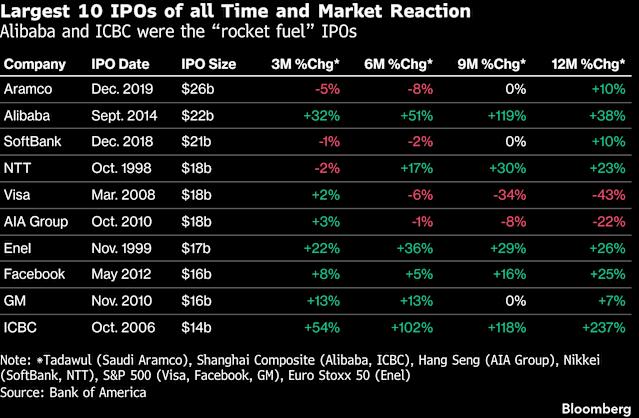 Source: Bank of America. Image for illustration purposes, not indicative of future performance. This information is not investment advice. Do your own research.
If the listing is large relative to recent new listings, first-day trading may be active and volatile. However, the scale and duration of any price movements would depend on market conditions, investor demand, valuation, and the final IPO structure.
Reports have suggested that retail investors could receive a larger-than-usual allocation in a potential SpaceX IPO. However, unless confirmed in official offering documents, the final allocation, offer size, and investor access should be treated as uncertain. Investors should rely on the prospectus and formal announcements when assessing availability.
Reports have suggested that retail investors could receive a larger-than-usual allocation in a potential SpaceX IPO. However, unless confirmed in official offering documents, the final allocation, offer size, and investor access should be treated as uncertain. Investors should rely on the prospectus and formal announcements when assessing availability.
Before looking at what SpaceX might be worth, it helps to understand why the numbers being quoted are so large, and why they are also so contested.
SpaceX IPO valuation: why investors argue about a trillion-dollar number
SPACEX VALUATION
SpaceX is targeting a valuation of between $1.75 trillion and $2 trillion for its IPO, with plans to raise $75 billion in the deal.
To put that in context, only three US companies currently trade above $2 trillion: Apple, Microsoft, and Nvidia. If SpaceX prices at the top of its range, it would join that group on its first day of public trading, despite posting significant losses.
Valuation comparisons should be treated cautiously, especially for companies with different business models and profitability profiles.
Valuation comparisons should be treated cautiously, especially for companies with different business models and profitability profiles.
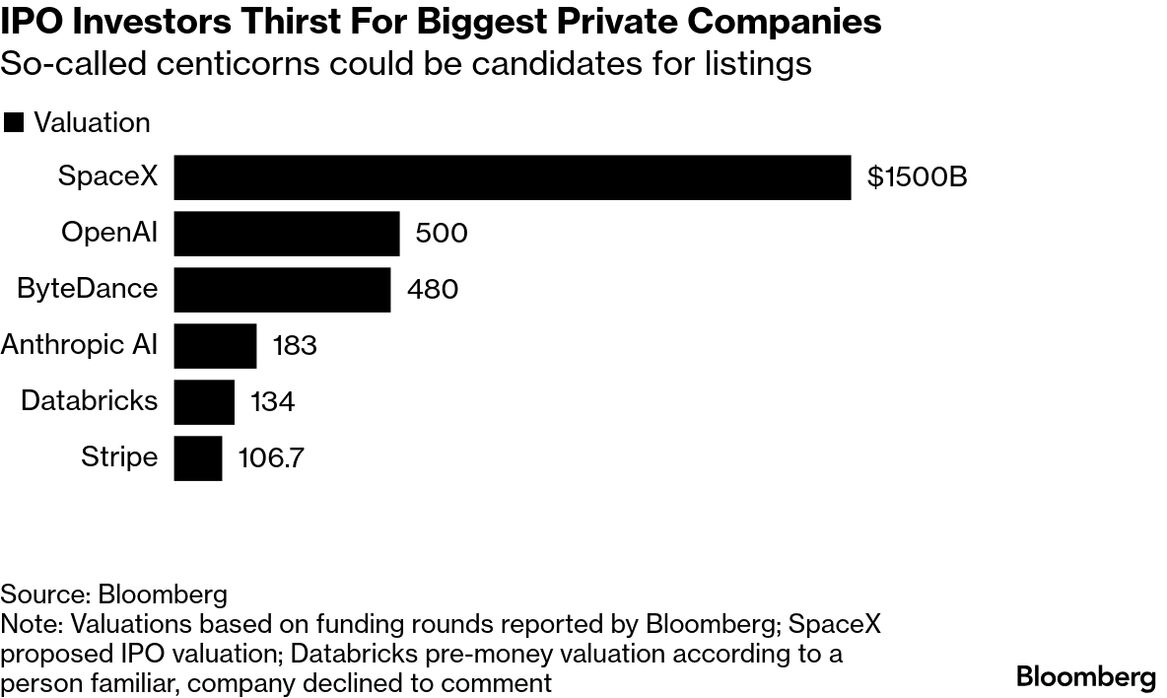 Source: Bloomberg. Image for illustration purposes, not indicative of future performance. This information is not investment advice. Do your own research.
The valuation debate centres on what kind of company SpaceX actually is. Of its three divisions, only the connectivity segment powered by Starlink was profitable in the first three months of the year.
Starlink generated $11.4 billion in revenue in 2025, with $4.4 billion in operating income, and 10.3 million subscribers across 164 countries. That is the part of the business that justifies a significant portion of the valuation on fundamental grounds.
Analysts disagree on how much weight to give to the AI division, the orbital data centre ambitions, and the longer-term bets on asteroid mining and space-based manufacturing, all of which are either loss-making or entirely speculative at this stage.
Starlink generated $11.4 billion in revenue in 2025, with $4.4 billion in operating income, and 10.3 million subscribers across 164 countries. That is the part of the business that justifies a significant portion of the valuation on fundamental grounds.
Analysts disagree on how much weight to give to the AI division, the orbital data centre ambitions, and the longer-term bets on asteroid mining and space-based manufacturing, all of which are either loss-making or entirely speculative at this stage.
SPACEX LISTING PRICE
No price range or share count was disclosed in the preliminary prospectus. That information will appear in a follow-up filing once the roadshow has gauged institutional demand.
According to Reuters, on 13 December 2025 SpaceX opened a secondary share sale that would value the company at around $800bn. Separately, Bloomberg reported that a company memo seen on 12 December 2025 set the latest secondary offering price at $421 per share. Private secondary-market prices are point-in-time reference points and may not reflect any future public-market price.
SpaceX IPO investment vs trading: Separating valuation from short-term moves
The distinction between buying SPCX as a long-term position and trading around the IPO listing is worth drawing clearly, because the considerations for each are quite different.
For those thinking about a longer-term position, the core question is whether the current valuation is justified by the business as it stands today or by what it might become. At an estimated market cap of $1.8 trillion, SpaceX would trade at 93 times trailing sales.
Since 1980, issuers with trailing annual sales of at least $100 million and a price-to-sales ratio above 40 have seen an average three-year drop of 45% from their first day's close. That is not a prediction, but it is a data point worth factoring in.
For those thinking about a longer-term position, the core question is whether the current valuation is justified by the business as it stands today or by what it might become. At an estimated market cap of $1.8 trillion, SpaceX would trade at 93 times trailing sales.
Since 1980, issuers with trailing annual sales of at least $100 million and a price-to-sales ratio above 40 have seen an average three-year drop of 45% from their first day's close. That is not a prediction, but it is a data point worth factoring in.
Trading SpaceX stock
For those focused on shorter-term price action, the first-day dynamics will be shaped by retail allocation sizes, institutional order flow, and the broader market conditions on the day.
A pre-buy checklist for SpaceX IPO investors
Before considering any position in SPCX, here are the practical things worth working through first.
- | Check these things | The details you should research |
1 | Read the prospectus (not the headlines) | The S-1 filed on 20 May 2026 is publicly available on the SEC's EDGAR database. Handy tip: Focus especially on the risk factors, business model, governance structure and valuation. Additionally: Revenue figures, loss figures, the share structure, Musk's voting control, and lock-up terms are all ready to dig through. |
2 | Understand the share structure | SPCX Class A shares carry one vote each. Musk holds Class B shares carrying 10X votes each, netting him 85.1% of combined voting power. Public shareholders will have economic exposure to SpaceX's performance but no meaningful say in how the company is run. |
3 | Know what you are buying into | SpaceX now covers Starlink satellite internet, orbital launch services, the xAI AI division, the Colossus data centre operation, and the X social media platform. NOTE: Only Starlink was profitable in Q1 2026. The AI segment lost $2.5 billion in that same quarter. Summary: A position in SPCX is a view on all of those businesses at once. |
4 | Check platform access ahead of the listing date | Trading 212 may make newly listed shares available once public trading begins, and pre-orders will be available before the SPCX listing opens – understanding how a pre-order differs from a standard market order is one of the most practical things a first-time IPO buyer can know. |
5 | Be clear on the valuation context | At a target market cap of $1.75 to $2 trillion, SpaceX would trade at approximately 93 times its 2025 trailing revenue of $18.7 billion. There is no P/E multiple to consider since the company posted a net loss of $4.94 billion for full-year 2025, and a further $4.28 billion in Q1 2026 alone. |
6 | Factor in the "lock-up period" | Specific lock-up terms have not been fully disclosed, but standard practice for technology IPOs at this scale is 90 to 180 days. Assuming a June 2026 listing, the window is expected to open between September and December 2026, at which point early investors and employees will be free to sell. |
How to buy SpaceX on Trading 212
Trading 212 gives retail investors access to new listings on their first day of public trading so SPCX shares can be bought through the app when the listing opens on Nasdaq.
The process is straightforward enough, but there are a few steps worth knowing in advance.
The process is straightforward enough, but there are a few steps worth knowing in advance.
Step 1: Make sure your Trading 212 account is set up and funded.
- First make sure you log in to the Trading 212 app or desktop platform.
- If you haven’t opened an account yet, the sign-up process can be completed directly through the Trading 212 app.
- Before the IPO date lands, remember to make sure your account is verified and that you’ve added sufficient funds to cover whatever the final IPO price is.
Step 2: Search for SPCX when the listing goes live.
- Once SpaceX begins trading on Nasdaq under the ticker SPCX, you’ll be able to search it inside the Trading 212 app.
- The stock won’t appear as a tradeable instrument until it’s active.
Step 3: Place a pre-order ahead of the listing.
- Trading 212 will offer the ability to place pre-orders on SPCX before the first day of public trading opens.
- The pre-order option will appear in the app ahead of the listing date.
- How a pre-order works: you submit your pre-order in advance at an unconfirmed price. Once trading begins, the order becomes active and executes according to your order type. A market order will fill at the prevailing price at the time of execution. A market order placed on the day of listing works the same way – neither guarantees a specific entry price.
Step 4: Decide on the size of the position and place the order.
There’s no need to place orders for whole share amounts to gain exposure to SpaceX stock because Trading 212 supports fractional shares. If you prefer, simply choose how much you want to invest in your chosen currency, and Trading 212 will automatically calculate how many SPCX shares this will be.
Step 5: Confirm the order and monitor the position.
- Once you place an order, a confirmation will appear straight away within the app.
- Given the volatility expected around the SPCX listing, it is sensible to keep an eye on the position in the days following the IPO.
Recap: Where to buy SpaceX IPO (and what to verify)
With a listing of this scale, knowing where you can access SPCX shares is a must know.
Trading 212 offers IPOs on their first day of public trading (what that means)
When SpaceX lists on Nasdaq under the ticker SPCX, Trading 212 customers will be able to buy shares on the first day of public trading. First-day access means orders can be placed once the Nasdaq opening auction completes and SPCX begins trading in the open market. The price available to retail investors on day one is the market price, which may be higher or lower than the institutional offer price set during bookbuilding, depending on opening demand.
Trading 212 pre-orders in advance: How earlier access can change your position
Ahead of the listing date, Trading 212 will offer customers the ability to place a pre-order, registering their intention to buy before the first day of trading opens. A pre-order is not executed at a confirmed price — it is filled at the market price when trading begins. Understanding this before placing a pre-order on a volatile listing like SPCX is a practical step worth taking.
Track the status of the SpaceX IPO on the instrument page and find out what to know before placing an order, including how pre-orders work, when regular trading is expected to start, and what risks to consider before investing.
Track the status of the SpaceX IPO on the instrument page and find out what to know before placing an order, including how pre-orders work, when regular trading is expected to start, and what risks to consider before investing.
SpaceX IPO FAQ
Q: When is the SpaceX IPO expected to list?
Reported indicative dates suggest the roadshow could begin around 4 June 2026, with pricing around 11 June 2026 and the first day of trading around 12 June 2026. These dates have not been officially confirmed and may change depending on the SEC review process, market conditions, and the final IPO timetable.
Q: What will the SpaceX share price be?
No final offer price has been set at the time of writing. The IPO price will be confirmed in the final offering documents before trading begins.
Q: When could retail investors buy SpaceX shares?
If the IPO proceeds as expected, SpaceX shares would become available once trading opens on Nasdaq. Trading 212 customers may also be able to place a pre-order before the expected listing date, subject to availability, eligibility, and the final IPO timetable.